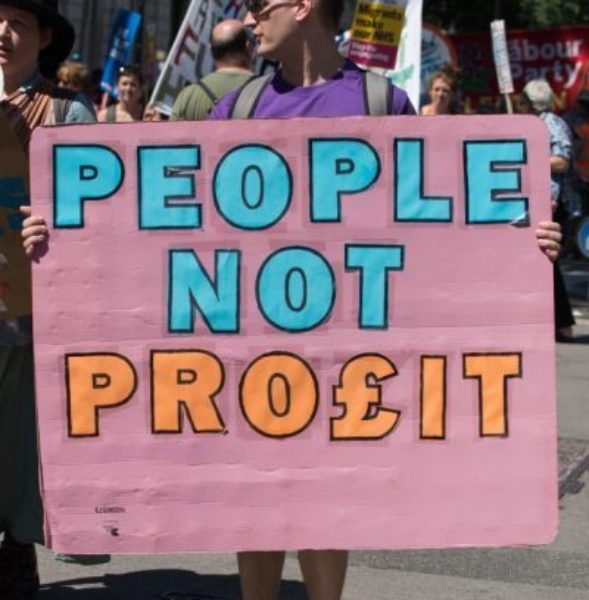
The private sector (for-profit and not-for-profit) provides over half the NHS inpatient beds for children and teenagers with mental health problems, and almost all of the secure beds for adults. The involvement of the private sector is now longstanding and the NHS is heavily reliant on this supply. Despite constant failures of care, many of them very serious, the private companies continue to be paid to take NHS patients. The reason - no investment has been made by previous governments to increase NHS capacity.
Privatisation
There are two aspects to the privatisation of mental health services:
- Contracts with non-NHS organisations, including private companies, community interest companies and charities, and
- Difficulties accessing NHS care pushing people to go private - rationing.
Historically, mental health services have been underfunded and not given the same priority as physical health services. Over the 14 years of Conservative government there were a number of commitments to changing the status of mental health services, including providing more funding, in particular when Theresa May was PM. However, these had little or no impact on the state of services. Much of the promised extra money did not get to the front line, nor did the funding match the increase in demand. Mental health services continue to experience a shortage of specialist nurses and psychiatrists and a shortage of suitable buildings.
The Covid-19 pandemic made a bad situation far worse. It was widely predicted that the Covid-19 pandemic would be accompanied by a wave of mental illness and this is now backed up by figures. The Royal College of Psychiatrists has warned that England is now “in the grip of a mental health crisis” as a result of the Covid pandemic. It is also clear that young people are bearing the brunt of the mental health crisis.
In October 2020, the Centre for Mental Health used a model to predict that nationally, in England, up to 10 million people (almost 20% of the population) will need either new or additional mental health support as a direct consequence of the crisis. 1.5 million of those will be children and young people under 18.
Prior to the pandemic both the NHS and the private sector had failed to respond adequately to rising demand. Within the NHS, inpatient mental health beds have fallen from 22,929 in Quarter 2 2010/11 to 19,249 in Quarter 2 2015/16 and then to 18,187 in Quarter 2 2025/26. This shortage of hospital beds across the country means that vulnerable patients are being treated out of their local area, away from families, causing distress and slowing their recovery. Alternatively, patients are being treated in the community with greater risk.
The NHS regularly searches countrywide for mental health bed space for patients and has little option but to lean heavily on private providers. A recent study found that 99% of Out of Area placements for patients with personality disorders were provided by the private sector.
Prior to the pandemic the NHS had already turned to private providers to boost capacity and as a result private health companies have a strong foothold in the NHS in this area; market analysts Laing & Buisson estimate that over 30% of NHS mental health hospital capacity is now supplied by the private sector. Providing NHS-funded care is by far the largest segment of the independent market value, with LaingBuisson estimating that approximately 92% (£2.16 billion) of the market value of these companies is generated from public payors (either NHS or local authority funding).
In August 2025, The King’s Fund published an investigation into the level of involvement of the independent sector in in-patient mental health services. The research looked at data for quarter 4 2024/25, and found that the independent sector accounted for approximately 28.6% of mental health bed capacity in England. Although there are a range of providers involved, companies, not-for-profit and charity, 67% of beds are provided by just three large organisations.
There are some areas of care, where the independent sector has a much higher proportion of beds. This includes inpatient treatment for children and young people, and forensic mental health services. The King’s Fund analysis found 259 beds in the independent sector available for the treatment of children and young people compared with 405 beds that were occupied by children and young people in the NHS during the same period. Similarly, 1,719 beds were available for the provision of forensic mental health care in the independent sector, compared with 3,685 occupied for the same purpose in the NHS.
In the area care for people who need to be admitted in a crisis, either to an adult acute mental health ward or an adult psychiatric intensive care unit (PICU), the analysis found that there were 8,872 beds that were occupied for this purpose in the NHS, with an additional 2,167 beds allocated as providing acute inpatient or PICU care in the independent sector. As a result, between 17% and 20% of available bed capacity was provided by the independent sector. The independent sector has whole private hospitals that are explicitly allocated for the admission and treatment of NHS patients.
The revenue that these companies accrue from NHS contracts has risen steadily in recent years and the biggest providers are now highly dependent upon NHS work as it makes up around 90% of the total market value, with self-pay and private medical insurance fees only accounting for 10%. Companies, such as Cygnet Healthcare, rely on NHS contracts, which supply almost all of the company's revenue.
The private sector is now also playing a large role in mental health services outside of the hospital sector. The UK psychological services market is experiencing a period of significant growth, driven in part by rising prevalence and diagnosis of psychological conditions, technological advancements and government initiatives aimed at expanding access to services.
The most notable area is Attention Deficit Hyperactivity Disorder (ADHD) and autism where assessments have reached record levels as awareness of the condition has increased and NHS services have become increasingly stretched, with more than half a million people now waiting for an assessment (January 2026).
The private sector has been quick to target this market. In November 2025 the NHS-England commissioned ADHD Taskforce report said that the inability to access NHS services has led to a “significant growth in the use of private providers that are not regulated”.
In January 2026, the Guardian reported that spending on ADHD services is estimated to reach £314m by April 2026, more than double the year’s budget of £150m set aside for this area of healthcare.
Nineteen ICBs also provided data on how much of their ADHD budget went on private companies. The research showed that spending had more than tripled in three years, from £16.3m in 2022-23 to £58m 2024-25.
Due to how the data is collected, it could include some spending for other neurodiversity conditions as well as ADHD.
Contracts
Despite, the last few years seeing a succession of highly critical reports by the Care Quality Commission (CQC) on residential mental health services with many hospitals and services rated “inadequate” and others closed completely or to new patients, the lack of NHS capacity means the NHS is forced to continue to offer contracts to private providers.
The three leading companies, The Priory, Cygnet Healthcare, and Active Care Group (previously Huntercombe Group) have all had to close wards as a result of damning CQC reports, and St Andrews Healthcare the leading not-for-profit in the sector has had severe limitations put on its services due to CQC reports.
Commissioning bodies (NHS England, ICBs, hospital trusts and councils) all have contracts with private companies, community interest companies and charities to provide mental health services. Contracts cover a broad spectrum of services, including those covered by public health and commissioned by councils.
The size and type of contract used for mental health services varies across areas. In England as a whole, framework contracts are in place, which list a number of providers which can be contacted by commissioners seeking providers of mental health services, such as inpatient beds. Many local councils also have framework agreements for the provision of substance misuse services, one of the main areas covered by the council's responsibilities for public health.
Recent contracts have included two large framework contracts that target mental health and wellbeing services, rather than in-patient services. These contracts were set up to target the long waits for diagnosis of neurodivergent conditions, including ADHD and autism. Numerous private companies have been awarded places on these contracts.
The contracts are:
- In September 2025, The Countess of Chester Hospital Commercial Procurement Services advertised the re-opening of a multi supplier national framework agreement for the provision of Mental Health and Wellbeing Services under the Provider Selection Regime. The framework runs to September 2029. The estimated overall value of the framework is £135 million and it covers all of England and Wales. The services provided under this framework are Mental Health and Wellbeing services for young people, adults or both and covers a range of services that fall within the scope of Mental Health and Wellbeing services, delivered either virtually or in person.
- In April 2025, NHS Shared Business Services launched the framework - Mental Health, Learning Disability and Autism: Assessment and Diagnosis, NHS Talking Therapies and Crisis Services - and by December 2025, over 30 organisations had been awarded places on the framework, which runs from April 2025 to April 2029. SBS list the framework's value as £70 million. This framework is designed to speed up diagnosis of ADHD and autism and waiting times for therapy services. Organisations registered, include charities, such as MIND and St Andrew's Healthcare, and companies, including Clinical Partners Ltd and Independence Support Ltd.
Issues
Different financial priorities
In June 2023, the secretary of state for health and care announced that the Health Services Safety Investigation Body (HSSIB) would conduct a series of investigations into the mental health inpatient setting. The investigation was launched in January 2024 and completed in May 2025, with the publication of an overarching report which brings together and explores patient safety risks across the individual investigations.
Although not distinguishing between the independent sector and the NHS in its recommendations, in the HSSIB's 'findings' section of its final report it notes:
"Providers told us their ability to deliver therapeutic care is limited by workforce and funding pressures and every day they face the challenge of how to prioritise."
Also
"The investigations emphasise that care cannot be looked at in terms of just mental health providers, it often spans health, social care, local authority provision and education. Partners are often not working together in a consistent and integrated way as they have competing operational and financial priorities, creating friction."
In the case of private providers their priorities when it comes to finance will be different from NHS providers, as they are beholden to shareholders and investors. Payment for care of patients needs to cover their care and also produce sufficient profit for the company. With limited funding for care, something has to give - is it company profits or patient care?
Cost
Contracts with non-NHS providers can end up costing the NHS more than if the NHS provided the services itself. A recent example of this is in the area of ADHD and autism assessments.
NHS patients, primarily children but also an increasing number of adults, are facing waits sometimes stretching into years for autism and ADHD assessments. NHS England launched a taskforce late in 2024 to address the problem. The Right to Choose policy, which allows NHS patients to access treatment at private providers if they wish usually in an effort to seek faster treatment, has led to a massive increase in patients seeking diagnosis and treatment for ADHD and autism from private companies. However, the result has been a massive increase in cost for the NHS.
A Guardian investigation published in January 2026 found that the the NHS is overspending by £164m a year on ADHD services, with an increasing amount going to unregulated private assessments. Nineteen ICBs provided data to the Guardian on how much of their ADHD budget went on private companies, and showed spending had more than tripled in three years, from £16.3m in 2022-23 to £58m in 2024-25.
A report by the CHPI warns that the ADHD and autism market is particularly attractive to private providers as a company needs only one contract to treat patients anywhere in the country, and there is no cap on how much they can earn, because local NHS bodies cannot restrict patient numbers.
In May 2025, Northamptonshire Integrated Care Board was reported as having to pay private suppliers of ADHD and autism services three times as much as local NHS providers. Its annual bill of £3m was driven by patients opting for private treatment via Right to Choose. The ICB described the situation as “unsustainable”.
In mid-2025, two private companies, Clinical Partners and Psychiatry UK, reported a huge increase in income as a result of people opting for private assessments under Right to Choose.
Clinical Partners, which provides a range of mental health, autism, and ADHD services, saw its turnover double from £14.5m in 2022 to £29.2m in 2024 and its profits rise from £11.4m in 2023 to £15.6m in 2024. Clinical Partners's biggest NHS customers in 2024 Leeds Community Healthcare Trust and Birmingham Community Healthcare Foundation Trust, who spent £6m and £5m on the company’s services respectively.
Psychiatry UK, which carries out similar work for the NHS, saw its income triple in size to £53.3m between 2022 and 2024.
In an attempt to tackle the spiralling costs for ICBs, in April 2026, NHS England set new guidance prices for ADHD and autism assessments. In some cases the new tariffs could cut the fee in half.
NHSE says some prices per assessment have reached up to around £2,000. But under its new prices, they will range from £700 for a virtual adult ADHD assessment to £1,500 for a combined ADHD/autism assessment for children. The independent sector has obviously complained about these cuts in payment, but the NHSE said the prices were not a cap and did not restrict local commissioners, but that they would lead to consistency and fairer value.
Continuity of Care Issues
A Guardian investigation into the diagnosis of ADHD and other neurodivergent conditions by private companies uncovered cases of serious harm that appear to have been caused by problems with continuity of care after a private diagnosis.
In March 2025, a coroner issued a prevention of future deaths report on the death of 27-year-old Sheridan Pickett, who died by suicide after receiving an online ADHD diagnosis and taking stimulant medication prescribed by a private clinic.
When Pickett was later admitted to an NHS hospital after an overdose, doctors warned that the ADHD drugs should not be restarted, but that information was never passed back to the private provider, which continued prescribing.
The coroner noted that there were no formal rules requiring information-sharing between private neurodevelopmental services and NHS teams, and warned that without change similar deaths could occur.
The Guardian reports that experts said the standard of assessments carried out by private companies was not always good enough. One NHS clinician, speaking anonymously, said: “Some private providers do deliver good-quality assessments, but I’d estimate that around 70-80% do not, and there are certain ones I simply won’t work with when I see their name on the report.”
In January 2026, the Guardian reported on the lack of joined-up care between the private sector and the NHS. Although the NHS is increasingly referring patients to private providers, which it will then pay for, many of these assessments are then rejected. This is leading to an inefficient system that wastes public money and leaves patients without care and mental health trusts struggling to cope.
In a letter shared with the Guardian, the Midlands partnership university NHS foundation trust acknowledged it was struggling to cope and the trend was contributing to long waiting lists and “reduced capacity for new and complex cases”.
The trust highlighted the structural weaknesses of right to choose itself. “There is limited regulation surrounding private ADHD providers,” it wrote, noting that providers could establish services and request to diagnose ADHD, but that “at times their assessments do not comply with Nice guidelines”.
Rather than relieving pressure on NHS services, the scheme appears to be recycling it. The trust said the current model “highlights the challenges and limitations” of a system that can diagnose quickly but cannot always find “appropriately skilled staff to support prescribing.”
Quality of Care Issues
The recent increase in private companies being used via the NHS right-to-choose system for ADHD and autism diagnosis has bought with it quality of care issues. As already discussed above often private diagnoses are being rejected by the NHS, this can be because they are not compliant with guidelines from the National Institute for Health and Care Excellence (Nice). There are also major issues with continuity of care.
Holistic ADHD Solutions (ADHDNET) was registered with the Norfolk and Waveney ICB, which meant patients from across England could use its services under “right to choose” rules. The provider has an office in Leeds but offered remote consultations for adults nationwide. However, in December 2025 the company was suspended from registration. A notice on the ICB’s website says the suspension is “a precaution to ensure people’s care remains safe”, and that the move was triggered by concerns “regarding service management, safety oversight, and continuity of care arrangements”.
“The suspension notice remains in place, and we continue to meet with the company and the [Care Quality Commission],” it adds. “The company has agreed to take a number of actions to address the concerns raised about the management of the service and patient safety.”
The company’s own website blames the development on an “administrative issue”.
HSJ reported that the company has dozens of poor Google reviews, many about post-assessment follow-up and poor communication.
For many years there have been regular reports from whistle-blowers and the Care Quality Commission of appalling quality of care at private mental health hospitals. The past few years have seen a number of hospitals run by private companies castigated by the CQC, particularly in the area of CAMHS. The three leading companies, The Priory, Cygnet Healthcare, and Huntercombe Group (now Active Care Group) have all had to close wards as a result of damning CQC reports, and St Andrews Healthcare the leading not-for-profit in the sector has had severe limitations put on its services due to CQC reports.
Failures at the leading private companies - The Priory, Huntercombe Group, Elysium Healthcare, and Cygnet Healthcare - plus other contract failures are detailed in the section Contract Failures in Mental Health and in individual company profiles.
Plus CQC reports were published in September 2019 in which it found 28 mental health units run by private companies to be “inadequate” in the past three years; in November 2017, where the CQC report found that nearly three-quarters of private clinics were failing to hit regulatory standards of care for addiction services; and from October 2018 to October 2019, the CQC rated as inadequate 14 independent mental health hospitals that admit people with a learning disability and/or autism, and put them into special measures.
In November 2018, The Times published a damning article exposing the companies and charities that make millions by providing substandard care to NHS patients. The article included one case where the directors of a psychiatric hospital that was found to provide substandard care to NHS patients by the CQC, had paid almost £25 million into a secretive trust in Belize. The article noted that the company had received £26.3 million for services over 18 months in 2016-17 from NHS contracts.
A two-tier system
The chronic underfunding of mental health services has led to long waiting times and a reduction in treatment times. This has pushed people into the private sector, effectively creating a two-tier system; timely and appropriate care for mental health conditions being only available for those who can pay, and for those who can't pay there is the likelihood of long waits and/or insufficient treatment.
Financial instability
Several of the private providers involved in this sector are in a precarious financial position in a similar way to those involved in long-term care of the elderly and those with learning disabilities. For more details see our section on long-term care and Private Equity in healthcare.
Companies
Leading companies in the mental health sector include:
The Priory Group
The largest private provider of mental health services to the NHS, The Priory Group, consists of The Priory and Partnerships in Care and has 60 facilities and over 2,500 beds. The company is owned by Waterland, a Dutch investment company. See our company overview here.
Active Care Group/The Huntercombe Group
The Active Care Group took over The Huntercombe Group in 2021. The company took on the 11 hospitals in England and Scotland of The Huntercombe Group which increased its locations to 58. However the closure of Taplow Manor hospital was announced in March 2023. The company specialises in looking after people who have mental health problems or who have learning difficulties or brain injuries. Huntercombe Group was part of the Four Seasons Health Care Group, the UK’s largest independent elderly and specialist care provider, but was sold to Active Care Group in 2021. The Active Care Group covers: residential and supported living; home care; Christchurch Rehabilitation Services; Huntercombe Services; Remeo Respiratory Services; case management; and Jane Lewis Healthcare Recruitment Solutions.
Active Care Group is majority owned by Sequoia Economic Infrastructure Income Fund Limited, which took over from the Montreux Healthcare Fund, an investment fund based in the Isle of Man, and administered by Montreux Capital Management (MCM). The takeover was due to a financial crisis at ACG in May/June 2024 and months of escalating financial difficulties. A full overview of the company can be found here.
Cygnet Healthcare
Cygnet Healthcare was established in 1988 and specialises in providing services to those with mental health problems people with learning difficulties. The company offers 11 services, including secure accommodation, personality disorder, CAMHS, eating disorders, autistic spectrum disorder and neuropsychiatric. In mid-2018, Cygnet acquired Danshell Healthcare, which has 25 homes specialising in the care of people with learning disabilities and autism. The company is ultimately owned by Universal Health Services Inc, a US company. A full profile is available here.
Elysium Healthcare (Ramsay Health Care)
Elysium Healthcare is the third largest private mental health in the UK with 66 facilities. The company was bought by private equity investors BC Partners in 2016 for £320 million. BC Partners bought a number of facilities from Partnerships in Care and The Priory Group when they were sold by Acadia Healthcare. Further acquisitions have enlarged the group giving a portfolio across mental health care, neurological care, education, children’s services and private patient services. In October 2020, BC Partners began looking for a buyer for the company. In 2021 it was acquired by Australian company Ramsay Health Care who operate more than 530 healthcare sites across 10 countries. In September 2020, Elysium Healthcare bought Cotswold Spa Hospital from the Huntercombe Group for an undisclosed sum.
Over the past two years, inquests held on three deaths at Elysium Healthcare hospitals found failings by staff at the clinics. In July 2021, an inquest jury in Milton Keynes found that serious failures of risk assessment, communication, and the setting of observation levels contributed to the death of 19-year-old Brooke Martin in 2019. Brooke, who had diagnoses of autism and emotionally unstable personality disorder, was detained under the Mental Health Act at Chadwick Lodge Hospital, a facility owned by Elysium Healthcare.
In November 2021, inquests held just seven days apart heard how Nadia Shah, 16, and 19-year-old Leon Tasi were found with ligatures round their neck at clinics run by the company. In both cases juries were told inadequate checks had been made on the pair. An inquest jury ruled that Nadia had been failed by the clinic. A “chaotic” scene then led to a delay in Nadia receiving basic life support. At Leon’s inquest, a coroner was told staff gave him back his belt – which he then used to hang himself. He had been detained under the mental health act. Staff had failed to carry out an hourly visual check to see that he was safe, the inquest was told.
See our company overview here
St Andrews Healthcare
St Andrew's Healthcare is a registered charity that provides a range of mental health services under contract for the NHS. The vast majority of its 600 patients per year are referred by the NHS. Founded in 1838 with a hospital in Northampton and now has locations in Essex, Birmingham and Nottinghamshire. There have been a number of incidences at the charity's hospitals that have led the CQC to issue a number of very critical reports on the organisation, its management, staff, governance, and safety and quality of care over recent years. A company overview can be found here