Over the years there has been a number of contracts in the area of imaging diagnostics and pathology where companies have failed to carry out the contract as required.
Synnovis falls below standards
In December 2025, King’s College Hospital Foundation Trust said turnaround times for histopathology tests carried out by Synnovis had fallen below expected standards and that immediate action was needed to the “time-critical” care needs of some patients.
The delays follow the relocation of services into Synnovis’ new hub in Blackfriars in central London. This hub is set to process around 70% of all the pathology work the company undertakes.
The trust has said it was taking too long to transport samples the four miles from the hospital to the hub and then to complete testing and return results. This has meant that some results have not been available in time for planned discussions between clinicians and patients, “potentially then delaying the start of their treatment”.
In early June 2024, Synnovis was subject to a ransomware attack by an organisation known as Qilin that affected the pathology systems of Guy’s and St Thomas’ and King’s College Hospital foundation trusts (GSTT), and of primary care across six boroughs in south east London.
The GSTT chief executive said that the trust was unable to connect to the servers of Synnovis. Senior sources told HSJ that resolving the issue and gaining access to pathology results could take “weeks, not days”. This led to the suspension of blood transfusions along with large numbers of blood tests in primary care, and some other planned procedures; and major trauma cases diverted from King’s to elsewhere in London.
It was one of the largest NHS cyber attacks in terms of impact. By the end of June 2024, it was thought that more than 100,000 people’s test results could now be on the dark web. In June 2025, it was revealed that the ransomware attack led to the death of at least one person, due to various factors including a long-wait for a blood test.
On 22 August an NHS England update noted that so far 1,696 elective procedures and 10,083 acute outpatient appointments had been postponed at King’s College Hospital NHS Foundation Trust and Guy’s and St Thomas’ NHS Foundation Trust since 3 June.
Testing services for GP practices in Bexley, Lewisham and Greenwich only returned to Synnovis on 15 August, and testing services for the remaining three south east London boroughs, Bromley, Lambeth and Southwark are planned to return to Synnovis over September.
The full restoration of blood transfusion services, however, was planned for early autumn.
The hackers asked for payment to allow Synnovis back on to its systems, and to stop it releasing the patient information it stole.
Rutherford Health goes into liquidation
In June 2022, the private cancer diagnostic and treatment company Rutherford Health was placed into liquidation. This was only eight months after the opening of a new community diagnostics hub (CDH) within a partnership between the company’s subsidiary Rutherford Diagnostics and the NHS’s Somerset Foundation Trust (SFT), which was heralded as “game-changing” for the trust’s capacity to carry out diagnostics.
The new stand-alone CDH, opened by Sir Mike Richards, the author of the 2020 report that pushed the idea of CDHs to expand diagnostic capacity, was part of a five year partnership deal with SFT begun in July 2020 (with the option to extend to ten years). The centre was to provide diagnostic services including Magnetic Resonance Imaging (MRI), Computed Tomography (CT), Ultrasound and X-Ray using equipment provided by Rutherford’s technology partner, Philips, in an effort to reduce the significant waiting lists for such procedures.
Test & Trace system failures
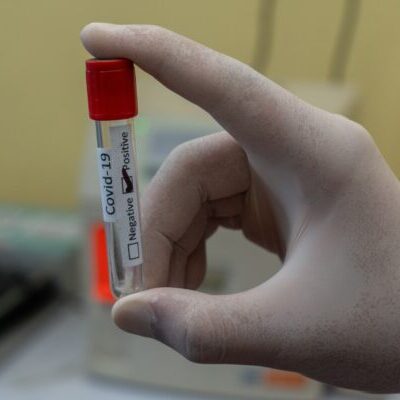
The Test & Trace system set up in the Covid-19 pandemic involved the awarding of multiple contracts to private companies for pathology – testing for the virus. Serco won many of the contracts, together with Sitel and several management consultancies. The entire test & trace system has been shown to be a failure on a grand scale.
A damning report from the Public Accounts Committee (PAC) in October 2021 stated that the test-and-trace system has failed to achieve “its main objective” to cut infection levels and help Britain return to normal. The report added that the failure was despite being given an “eye-watering” £37bn in taxpayers’ cash or 20% of the NHS’s entire annual budget over two years. More details of the system and its failures can be found in Test & Trace: a major failure of contracts in private companies and Covid-19 contracts with the private sector.
Capita’s failure in primary care
The Capita contract for Primary Care Services Support, which has failed in a number of areas (see GP Services) also includes a substantial amount of diagnostics support. In November 2018, it came to light that Capita had failed to send out nearly 50,000 letters as part of the cervical cancer screening programme and although the company discovered this issue in August 2018, it neglected to inform NHS England of the issue for two months.
GE Healthcare system failure
In April 2018, it was reported that a consortium of NHS trusts, known as the East Midlands radiology consortium (EMRAD), is withholding money from GE Healthcare because a multimillion pound imaging system is still not working properly. The agreement was signed in 2014. There was widespread concern in 2017 over the performance of the EMRAD system, which frequently crashed leaving clinicians unable to see or share patient scans. In at least one case in Leicester, images were saved to a CD and sent by taxi to Nottingham. As a result of continued problems, University Hospitals of Leicester Trust announced in October 2017 that it would withdraw from the consortium and seek an alternative system.
Viapath failings
In pathology the most widely reported problems have been with the company Viapath, established by Serco in partnership with Guy’s and St Thomas’ hospitals, In 2014, Viapath was found to have overcharged the NHS for diagnostic tests. The venture has also been dogged by allegations of cost-cutting and clinical failings. Internal documents showed amongst senior consultants who claimed that staff cuts and a lack of investment since privatisation left some laboratories close to disaster.
In internal emails clinicians said the company had an “inherent inability… to understand that you cannot cut corners and put cost saving above quality.” The trust and Viapath say the problems have now been resolved. But this only happened after the intervention of senior medical staff and changes to the structure of the joint venture that reduced Serco’s role.